
Camera Bodies
May 2020
In this article, I discuss the camera bodies I have chosen to use in 2020 and my reasoning behind each one.
In this post, I also discuss ‘Why Fullframe DSLRs?’ and ‘Why 20MP?’
We are now well into 2020 and the next decade has a lot in store for us. Especially, camera technology taking leaps and bounds in becoming better. Mirrorless is now a staple amongst many professional and amateur photographers especially because of it’s small compact size which somewhat means, it’s lighter. However, with mirrorless technology taking over the world, DSLR’s aren’t going anywhere soon.
With many photographers making the switch to mirrorless bodies, DSLR’s have become real cheap on the second hand market.
Even though I try and capture everything including portraits, wildlife and architectural, I do have a deep passion for astrophotography and landscape. With landscapes, there is just something magical about going out into the wild and out of your comfort zone and witnessing our planet’s beauty. And with astrophotography, my camera is just a tool to help me realize how unique our home is amongst all the stars.
With that in mind, lets jump to my current photography gear for 2020;
Camera bodies:
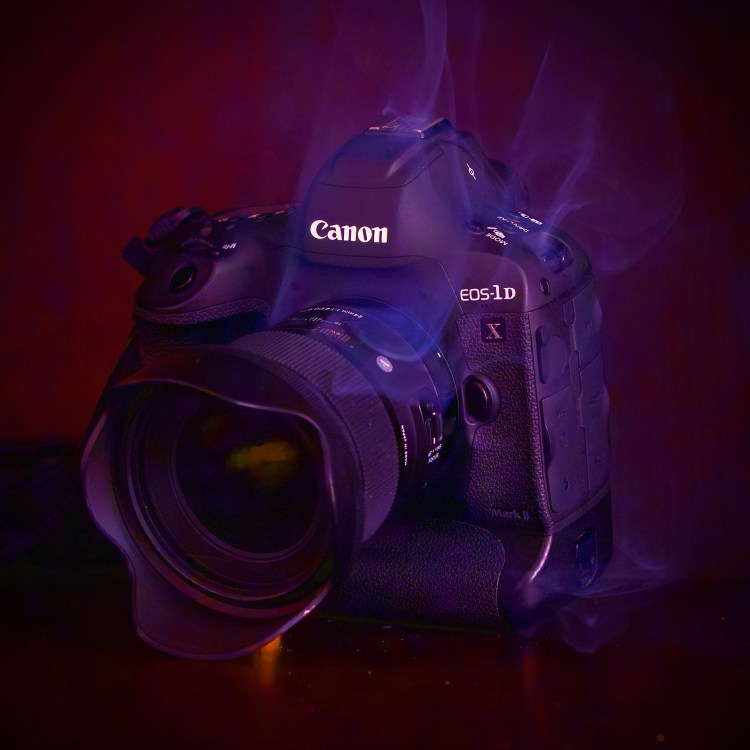
Canon 1DX Mark II
Canon 6D
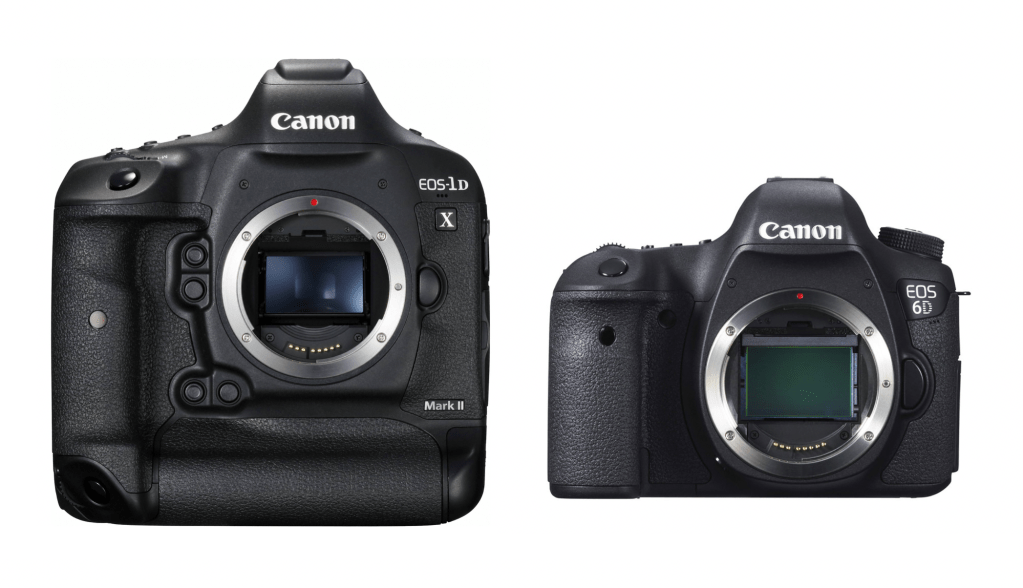
Canon 1DX Mark II
The 1DX Mark II was released in 2016 as Canon’s flagship DSLR and was only recently taken over by the new 1DX Mark III which was released in February of this year. Given that it is Canon’s flagship, you can expect nothing short of the best. It excels in video however I am more focused in the photography side.
With 14 frames per second (16 fps in live view), this camera is designed for wildlife and sports. Though I am not a sports photographer and I barely shoot real wildlife where I am out in the wilderness camping under foliage expecting wild animals, the 14fps does come in very handy when you least expect it. Apart from random shoots and points in time when I do use the 14fps, it is handy for capturing local birds flying out grasping the morning sun. Or for the unexpected movements by wild cats in zoos.
With its burst rate, comes serious autofocus tracking. The ability to choose different tracking modes does help however for most of the time, I leave it at it’s default setting which is ‘Versatile AF’. At 20.2 megapixels, this camera does capture astonishing detail in images and does produce a really good print. At ISO 400, you can safely do a large print of 30×40 inches with only a very slight pixilation if you look at it upon close inspection but at normal viewing distance, the image looks clean [1]. Though it may be considered low in megapixels in 2020, for photographers, megapixel count is not a concern or a deal breaker as it does not matter much when producing prints. What’s more of importance is the quality of optics that goes on the camera. What does make this camera appeal to many photographers is it’s new full frame sensor that just blows my mind. Canon redesigned their sensor from ground up for the 1DX Mark II to deliver new clean quality images with low noise at high ISOs. This is rather useful for high shutter speeds where high ISOs are needed to balance the image. Usually one wouldn’t bother using anything above ISO3200 in a dark location however with this new camera, you can push it up to ISO10000 without too much noise distracting you. It’s native ISO ranges from 100 – 51200 and can be expanded to 409600 though that would only be used at night to create your composition. With improved low noise at high ISOs, there is virtually no noise at low ISOs which is creates remarkable images. With this new sensor comes a superb dynamic range. With 14 stops, you can capture incredible detail in the highlights without sacrificing too much on the shadows even at high ISOs. The Canon 1DX Mark II’s sensor also marks the first sensor in Canon DSLR lineup to offer ISO invariance. Though it’s technical and needs a separate article, in lay man terms, ISO invariance is the ability to capture an image at base ISO and still make it look identical to an image captured at ISO 1600 through adding 3 stops of exposure in post production. Now a lot of people do complain that this massive camera is heavy however I find it perfect! It feels solid in my hands and it weight does help ground it when placing it on tripods (ie. Not affected badly by wind). The extra built in battery grip is perfect as it allows for a bigger battery which means I can go out on adventures and mountain tracking without ever worrying about carrying spare batteries. I love this camera and do not really have any cons against it.
Canon 6D
After selling my crop sensor camera (Canon 200D) this year, I purchased a second hand near new Canon 6D for a relatively good price. The Canon 6D was released in 2012 and came with 20 megapixel sensor. So why the 6D and not the 6D Mark II? After reading reviews and seeing real world tests, I realized that Canon had sadly prioritized other functions such as timelapse capture, more megapixels etc over an improved sensor and as such the 6D Mark II performs poorly against the original 6D at night. It is a nice camera during the day but I do have a deep passion for astrophotography and as such I need a camera that can perform well at day and at night. At ISO6400, the 6D produces a cleaner image (than the 6D Mark II) which came as a surprise to many. With it’s remarkable sensor offering clean images at high ISOs, and the fact that it’s a full frame sensor, I picked up a 6D as my second/backup camera. Also being the lightest full frame DSLR to be offered it was helpful in connecting it to star tracker kits where weight is important.
Why Full-Frames DSLRs?
The two Canons I own are full frame DSLR cameras. But why when there are many other options available? Each camera is different and each camera has a unique purpose. The two cameras mentioned both offer the best and serve my needs the most. As mentioned earlier on, my deep passion lies in landscape and astrophotography. With landscape, I often go on adventures where I am no where near a power outlet and as such I need a camera that can perform extremely well for long durations of time. DSLR’s have amazing battery life. With the mirror, you don’t use power when composing your frame and only use power when you press the shutter button to take the picture. With mirrorless, the sensor is always on in order to provide a picture for the rear screen which chews power thus reducing battery life. Another reason why I still prefer DSLR’s is because of weather sealing. When I am out, I don’t mind if my camera gets dirty with mud or a bit of water and that’s because these cameras have amazing weather sealing. Not saying that mirrorless don’t have weather sealing but there have been no tests to say it’s as good as DSLR cameras. Also with this mirror technology being around for a very long time, there are so many good choices of lenses to choose from. Be it brand new or second hand, you can get a lens for every situation.
Also, this is my personal preference, but I like a nice heavy camera in my hand and DSLR’s feel solid to use.
So, I have discussed why DSLR’s over mirrorless but why full frames? Especially when you can get a cheaper package in a crop sensor camera. I prefer full frames mainly because of 2 advantages. The first being full frame cameras provide you with the exact focal range when using a lens. For example, a 35mm lens will give you exactly 35mm on a full frame however it will give you 56mm equivalent focal length on a crop sensor. Crop sensors are smaller and as a result, it will result in a zoomed image. See image below.
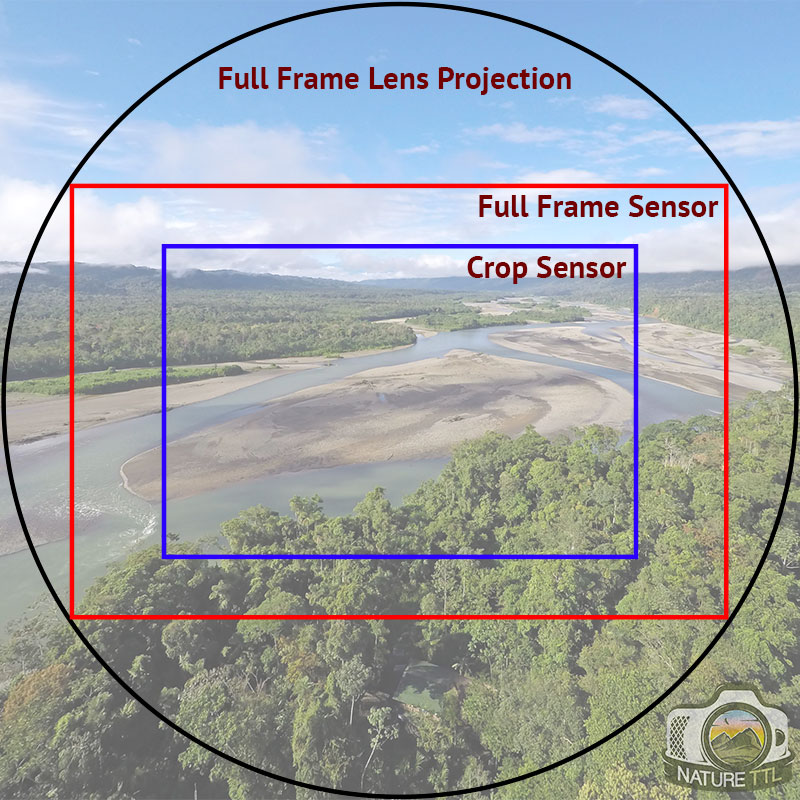
Another advantage that the full frame sensor has over the crop sensor is the dynamic range. Since each pixel within the sensor is bigger, it allows for better performance at higher ISOs and better dynamic range. You can read more about it on the net.
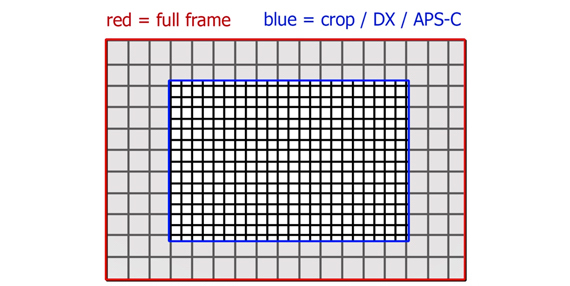
As mentioned, I do love my stars and to get the most out of it, full frame cameras help. Because a full frame sensor is bigger, it allows more light to enter and be recorded. This is very beneficial to astrophotography, as you want to record as much light as possible without sacrificing on quality. See image below for reference;
Why 20 megapixels?
So the two cameras above both come with a 20.2MP sensor. Yes, there are so many other full frame (and crop sensor) cameras with a denser sensor with some full frame cameras going as high as 64MP. As mentioned earlier, megapixels do not matter too much to photographers. It is of importance when working on prints or cropping into a picture to get the specific subject though. However, personally 20 MP is the perfect amount for me as there aren’t as many pixels in the sensor as a 64MP camera and as such each pixel within the camera is big. And big pixels do matter a lot especially for low light situations where the sensor can capture incredible amount of detail without much noise. Referring to the image below, you can see the difference in pixel size for a full frame camera compared to a denser full frame sensor.
For comparison, the pixel size for my 1DX Mark II is 6.54µm (micrometers) and the pixel size for my previous owned Canon 200D (24MP) is 3.7
µm. That difference is very noticeable when shooting low light situations.

So in summary;
The full frame cameras I have chosen for myself are beneficial for me because
- They are nice and sturdy. Feels solid
- Excellent battery life and weather sealing
- The 20MP super clean sensors are excellent for astrophotography
- Overall an amazing experience!
As much as I love my cameras however I must continue to remind myself that these are tools that are meant to help me capture the wonders of our world. And that I shouldn’t be afraid to get it dirty with scratches as each mark on it represents an adventure.
Enjoy shooting!
Let’s build something together.

 Ananda Sai Gallery